Unburdened by false humility, postmodern trauma activists claim to have understood for the first time what drives all of human suffering
Trauma DispatchTrauma news you can't get anywhere else. |
|
|
CATEGORY: BOOK REVIEWS 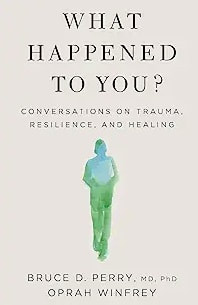 written by Michael S. Scheeringa Read time: 3.5 minutes For some years now, progressives dominated the ranks of academia and media and have largely controlled many of the ideas and language we are exposed to. One of the primary ideas upon which many leftist agendas rise or fall is the conviction that human material is highly plastic. This is evident in the old claim by Marx that capitalism oppresses the soul of the proletariat to the new claim of modern neuroscience that trauma alters the self by changing the brain. As Daniel Patrick Moynihan wrote, “The central liberal truth is that politics can change a culture and save it from itself,” i.e., the central progressive belief is that politics ought to be a tool to change individuals, hence, unrestrained government is justified to expand, regulate, and intervene in society. Book Summary The title of the book What Happened to You? has long been the catchphrase of the trauma-informed approach movement, and it concisely sums up the belief that humans are highly plastic. Perry and Winfrey claimed that if you received love and affection during the first two months of life, your neural development protects you from trauma with resilience. If you didn’t, your brain was permanently altered in many maladaptive ways. These alterations affect everything in your life. Literally. Everything. When you experience trauma without that resilience installed, trauma causes you to have “a different sort of world view,” shapes the very core of ourselves, determines the dosage of medications one can take, creates individuals who commit crimes, and determines personality development. It also causes drug addiction, heart disease, asthma, gastrointestinal problems, stroke, diabetes, and auto immune disease. Trauma is apparently transmissible to children just by watching parents be afraid, and can also be passed to children through birth in their genes by the mysterious and unproven mechanisms of epigenetics. They say trauma impacts “education, mental health, health, law enforcement, juvenile and criminal justice, family courts. It is impossible to find any part of society where this is not an issue.” The book is formatted as a back-and-forth conversation, with Perry in black font and Winfrey in blue font. But it’s obviously not an actual conversation. It’s largely a tag-team swapping of anecdotes to make readers’ heads swivel toward assertions about how trauma is the cause of nearly every bad thing in life. Perry “conversated” nineteen anecdotes to Winfrey’s thirteen.
Analysis Winfrey provided some of her childhood trauma story involving her demented grandfather trying to choke her grandmother. But if you’re looking for insight into how Winfrey overcame her childhood, you won’t find it here. If trauma shaped Winfrey, as the book claims trauma does to everyone to some degree, how did she become so successful? She must have had other resilience factors in her nature that other people didn’t have. Perry did not critically examine the research on any claims about trauma. He never described a single research study. Instead, Perry made broad generalizations from skewed interpretations of the science. From their book you would think experts totally agree with Perry and there are no controversies. His claims about the impact of trauma are, however, nearly all wrong. If you’re looking for the science on how trauma is associated with neurobiology, you won’t find it here. But if you’re looking for an ideology to explain your problems, this book is for you. Perry and Winfrey wield their beliefs to prove again that progressive leftists are not willing to allow empiricism to get in the way of a good theory. What is the real science? I’ve been a researcher on childhood trauma and PTSD for over thirty years, and I published some of the research that Perry and Winfrey should have read, so I think I can confidently grade Perry an F on his understanding of the science. The truth is that there are indeed many studies that show associations between PTSD with size differences in brain centers, different activations of neural networks, and different autonomic nervous system states. But it was never mentioned that those come almost entirely from cross-sectional studies, which means subjects were studied at only one point in time. Cross-sectional studies have absolutely no power to make causal conclusions. When better studies have been conducted, which are pre-trauma prospective longitudinal studies, the evidence does not support Perry and Winfrey’s extraordinary narrative that trauma can literally change your brain. Perry does have a few good things to say about treatment, but those were not based on science and they’re not new. Why Did This Happen? The book is another parcel in the trauma-informed campaign that has been spreading these beliefs across the U.S. since approximately 2000. Toxic stress, adverse childhood experiences, and complex PTSD are the main pillars of the beliefs. With Winfrey’s celebrity wattage landing the book on the best-seller list, this is the media-star version of Bessel van der Kolk’s equally wrong book The Body Keeps the Score. As I’ve described in my book, The Trouble With Trauma, I think a motivation for trauma-informed supporters to hold these beliefs comes from a skewed moral foundation that leads them to believe that nurture, not nature, causes many of the problems of most victims in our society, and fighting for victims makes supporters feel worthy. Their intent is to leverage trauma as a tool to achieve culture change, acquire funding for social programs, and alter society to make reality appear seamless with their vision of liberal truth. This is a shortened and revised version of my one-star review posted on Amazon.com in 2021. Like Trauma Dispatch? You can subscribe to our email notices of new posts on this page. CATEGORY: GOVERNMENT PROJECTS: COUNTRY  Suzanne Mooney, PhD Source: BNN news Read time: 1.7 minutes This Happened A government report assessed the status of implementation efforts and new recommendations to advance their agenda for Trauma Informed Approaches (TIA). The 44-page executive summary of the report was released February 22, 2024. The full report is not yet available. Who Did This? The Safeguarding Board of Northern Ireland (SBNI), which oversees child protection and other safety issues, commissioned the report. In 2017, the government funded new administrative positions to focus on adverse childhood experiences (ACE), which produced the first report in 2019 on efforts to embed TIA. The new report is an update on the first report, and was led by Suzanne Mooney, PhD, professor of social work at Queen’s University of Belfast. The Claim The report was organized by three domains of implementation: (1) Organizational development, (2) Workforce development, and (3) Service design and delivery. The sources of data included an online survey completed by SBNI member agencies and partner organizations, eight focus group discussions with managers, and a look at four implementation projects. Because the data were perceptions of whether services had improved, there were no standardized or quantitative measures of child outcomes. The report noted that “outcomes, however, were not always clearly specified in measurable terms and it was not clear whether any current evidence existed to support” the respondents‘ perceptions that services had improved (page 27). Despite the lack of evidence, the report made recommendations to deploy TIA principles into policies, produce a “government mandate” to change policies, and create a new government agency. Analysis Trauma informed approaches present insurmountable problems for project evaluators. The concept of trauma is purposefully broad by including non-traumatic stressful experiences of everyday life. Most importantly, the theory that ACEs cause a massive range of health problems is unproven, despite the assertions to the contrary from supporters who claim the ability to find causal relationships from weak, cross-sectional research studies. The burden of proving that their actions are evidence-based ought to be on the supporters of TIA, but by their chorus of assertions that the ACE theory is fact, they have managed to put the burden on others to disprove that which is unproven. Organizing the bulk of the report around organizational development and workforce development was revealing about the stakes involved. Most of their attention is on growing the governmental administrative state. In America, this is often referred to as the “deep state," or the unelected “fourth branch” of government that was never granted law-making power in the Constitution but now dwarfs the Congress in size and power. Why Did This Happen? Attempts like this to implement TIA are derivative of the ACE movement, which is an ideology masquerading as government-by-science. The ideology that human nature is almost endlessly malleable conflicts with the evidence that genetics are highly determinative of personality and health outcomes. The science of ACEs is seriously flawed but the assertions of ACEs have proven remarkably effective for leveraging actions from leftist-leaning governments. Like Trauma Dispatch? You can subscribe to our email notices of new posts on this page. CATEGORY: GOVERNMENT PROJECTS: CITY  Erika Rajo, PsyD, trauma psychologist Source: WDSU News Read time: 1.8 minutes plus 1.2-minute video This Happened Seeds of NOLA Trauma Recovery Center opened in early 2024 to provide free treatment and case management services for victims of trauma. Their mission: The first-ever service aiming to reduce the chronic violence in New Orleans by preventing intergenerational transmission of trauma. Who Did This? The program is part of University Medical Center. Some or all of the funding was provided by the New Orleans Department of Health. The amount and duration of the funding was not announced. The Premise According to the Center’s website, their mission is “Rooted in principles of health equity and social justice, the center provides wraparound services to people whose lives have been disrupted by traumatic injury and violent crime.” The Center’s “trauma psychologist,” Erika Rajo, PsyD, asserted that much of the violence in New Orleans is due to “unhealed trauma.” She hopes to prevent PTSD, heal trauma symptoms, and prevent intergenerational transmission of trauma, which in turn will reduce violence in the city. The Center aims to eventually provide, all at no cost to clients, individual and family psychotherapy, support groups, psychiatric medication management, case management, assertive outreach, legal assistance, and violence interrupters in the community. Analysis Intergenerational transmission of trauma. This theory postulates that parents who develop psychological problems from traumatic experiences can pass those problems to their children through the interactions of daily living and the children absorb the problems into their own minds through repetition. The theory is widely accepted despite the only type of research support for it in humans comes from cross-sectional and retrospective studies. There are no pre-trauma prospective longitudinal studies to support it. In addition, the mechanism of how transmission occurs, whether psychological or biological, is speculative and controversial. Prevention of PTSD. There is little to no evidence that PTSD can be prevented or is even possible. It is a common misconception among clinicians that there is a window of time between trauma exposure and development of PTSD symptoms. Research is clear, however, that nearly all PTSD symptoms begin immediately following trauma exposure. There is a small amount of research evidence that PTSD severity can be substantially reduced (not entirely prevented) with early intervention, but it comes from pharmacological interventions in burn patients (i.e., morphine). Psychotherapeutic interventions at early intervention have all failed, and some may have worsened symptoms. Why Did This Happen? New Orleans is among a handful of large American cities that have experimented with so-called trauma-informed approaches to tackle intractable histories of violent crime and racial inequities. The efforts have yet to produce measurable benefits. Should This Be Attempted? Efforts such as this, plus similar efforts in Chicago, Baltimore, and Philadelphia have originated as orders from executive branches of city governments or from votes of city councils without much public debate. The brief discussions that have occurred at city councils have been from invited local stakeholders who uncritically support trauma-informed ideology. Most citizens are unaware that city funds are being spent on untested approaches with little to no research support. Like Trauma Dispatch? You can subscribe to our email notices of new posts on this page. CATEGORY: POPULAR CULTURE  Miles Teller, as Sgt. Adam Schumann Written by Michael S. Scheeringa Read time: 3.4 minutes The understanding of human nature is today under continuous attack by government and culture. This is strange for many scientists, not in the sense of whether nature (genetics) versus nurture (life experiences) determines human nature is a valid question, but in the sense that the attacks from the progressive left are so sure that it is nearly all nurture. Trauma has been increasingly drawn into that arena as perhaps the most important element of nurture, and movies have been a frequent delivery device of that message. The Plot The 2017 movie, Thank You For Your Service, is a faithful recreation of David Finkel’s 2013 best-selling book of the same title, which followed the real-life psychological aftermath of war for Sergeant Adam Schumann and fellow soldiers. During deployment in Iraq, Schumann was a leader, a problem-solver, the one many of them trusted. Their luck, however, ran out. Men died and were maimed and Schumann blamed himself. Most of the movie takes place post-deployment, back in Kansas. One soldier panics when he finds his fiancé has left and cleaned out their house. Schumann is there to take him in. Another soldier has a traumatic brain injury and cannot remember the day of the week. Schumann is there too to get him out of jams. Schumann is happy to be home with his wife and children, but posttraumatic stress disorder (PTSD) has its grip on him, and suicide looms as an option. Psychotherapy services at the Veterans Administration are of no immediate help. They are told it will be six to nine months to get treatment. Schumann’s wife tries to help him. A dead friend’s wife tries to help him. Schumann tries to help himself by visiting a paralyzed buddy. Improvement eventually comes, and the gracefulness of the movie is how individuals cope in a human clan. Analysis Where the movie shines is how PTSD is realistically portrayed as the never-ending struggle it is for so many. These men have a rough landing but they do not blame invented oppressors for their misfortunes. They’re fighters. They make do. They have each other’s backs. Trauma did not change them into bad men. What’s worth watching are their struggles to sort things out. This contrasts to so many other Hollywood movies where PTSD is a plot device to drive violence or ill-fated, fantastical behaviors of trauma-exposed characters who flip into psychotic murderers. The issue I’m driving at is human nature. The Founders of the United States understood human nature as unchanging both in terms of natural rights and behaviors. As Madison explained in Federalist 10, human behavior inevitably results in factions and conflicts. The Constitution formalized their understanding that the purpose of politics was to cope with the problems inherent in unchanging human nature. The radical progressive liberal agenda for the past century to rewrite much of the Constitution has been inextricably linked to reframe human nature as highly malleable (the blank slate), thus removing all restraints on how government can grow and control human lives in neo-Marxist and socialist schemes. One can argue that the central impediment to the progressive liberal woke agenda is the idea that human nature is fixed. The progressive liberal belief in the primacy of nurture—including that trauma can change your essential character—is a compelling narrative for movies but has no basis in science. Schumann, in contrast, is the living embodiment of fixed nature; trauma can rough you up but it does not change your essential character, which has a strong basis in science. (This is a revised version of a blog post by the author from 2020 at www.psychologytoday.com.) Like Trauma Dispatch? You can subscribe to our email notices of new posts on this page. CATEGORY: GOVERNMENT PROJECTS: STATE  Josh Green, Governor of Hawaiʻi Source: KITV News Read time: 1.3 minutes This Happened Governor Josh Green signed Executive Order 24-01 on 2/20/24 to make Hawaiʻi a "trauma-informed state." This makes at least the seventh state to promote trauma-informed approaches across all state departments following Alaska, California, Delaware, Illinois, Pennsylvania, and Wisconsin. Who Did This? Green, a Democrat, worked as a family practice and emergency room physician before becoming Lieutenant Governor of Hawaiʻi in 2018 and Governor in 2022. During the COVID pandemic, Green stated that protestors against the vaccine were “people who don’t believe in science.” He said he was a lightning rod for protestors because he was outspoken in support for the vaccine and he was “a voice of reason on behalf of science.” The Claim The executive order claims that Adverse Childhood Experiences (ACE) studies have shown that ACEs cause problems with a person’s “health, opportunities, and stability throughout their lifetime.” By implementing a variety of so-called trauma-informed approaches, this will lead to better self-care, wellness, and resilience for state employees and communities. Analysis In 2021, a Trauma-Informed Care Task Force was created in Hawaiʻi. In 2022, the Office of Wellness and Resilience was created. Tia Hartsock, who holds a masters in social work, was appointed the first Director of the Office in December 2022. These efforts led to the governor’s Executive Order 24-01. All executive state departments now fall under the purview of the Office of Wellness and Resilience. They must move towards becoming trauma-informed with activities and goals that are to be determined. Each department must identify a Trauma-Informed Care Liaison. Additional activities may include administering surveys to employees about stress and health, trainings to educate staff on how ACEs causes health problems, teaching self-care to staff, and recommending new laws and policies for citizens. There were few details in the executive order, but it did include one rather specific mandate: All state departments must use “trauma-responsive language that supports reducing the impacts of adverse events without re-traumatization in requests for proposals and in-service contracts with providers.” It is unlikely that any meaningful outcomes will be achieved because the premise of ACEs as a causal agent of health problems has never been proven. Since Dr. Vincent Felitti’s initial 1998 ACE study, one hundred percent of the ACE studies have been cross-sectional studies, which have zero power to make causal conclusions. The relationship between adversity and health problems is far more complex than the simplistic ACE narrative. Also, there is no good evidence that implementation of a trauma-informed culture prevents ACEs, reduces stress, or improves meaningful outcomes. Why Did This Happen? Despite the lack of research evidence, these trauma-informed projects provide a strong sense for its supporters of doing something for the ills of societies. The advantages for politicians include that this provides another avenue for expansion of bureaucracy and for the administrative state to rule by science, and they get to decide what the science is. Like Trauma Dispatch? You can subscribe to our email notices of new posts on this page. CATEGORY: SCHOOLS  Anita Faulkner, MS, Director of NCA-STAR Source: UNC Greensboro Read time: 1.8 minutes This Happened University of North Carolina at Greensboro launched an online training program for educators to become trauma-informed. The Trauma-Informed Professional Practice K-12 Educator Certificate Program was announced on their website February 5, 2024. Who Did This? The training program is a product of UNC Greensboro’s North Carolina Academy for Stress Trauma and Resilience (NCA-STAR), which is housed within the university’s Department of Counseling and Educational Development. NCA-STAR was created in 2019, and the inaugural director, Anita Faulkner, was appointed in 2021. The Premise The premise is that when teachers learn how trauma and stress impacts a wide range of children’s emotions, sense of self, learning, and aggression, then they can implement new skills in classrooms to make children and schools more successful. Analysis The fourteen-hour course provides educators with an understanding of trauma’s impact on the lives of students, teachers, staff, and families. The topics include:
The cost is $349. Why Is This Happening? The “trauma-informed” concept originated in the early 2000s but has always been vaguely defined, with no consensus on a definition. This vagueness may be seen as a strength by allowing many projects to fall under its umbrella. As a result, the number of training programs, such as this one, have grown tremendously over the past fifteen years. Should This Be Attempted? Despite many individuals claiming that one or another interaction with a trauma-informed approach greatly helped them, there are no known tests of the effectiveness of these approaches. Because of the way trauma-informed approaches are broadly defined, it is nearly impossible to test them. The studies that have been published relied mostly on trainees’ self-perceptions of whether they feel better educated. What’s Next? Proponents of trauma-informed approaches appear to be more interested in promoting the premise that trauma is the root cause of nearly all disadvantages than in gathering evidence. It seems likely that controversies at the school level may start to increase as more funds and time are invested in these approaches without an evidence base. Like Trauma Dispatch? You can subscribe to our email notices of new posts on this page. CATEGORY: SCHOOLS 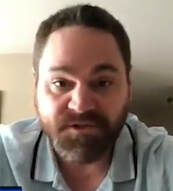 Nick Morio, trauma and resiliency coach (Credit WKBN 27 News) Source: WFMJ 21 news Read time: 2.5 minutes This Happened Akron Children’s School Health Services hired an individual to fill a new position called a “trauma and resiliency coach” who will work with local schools. Who Is Doing This? Akron Children’s is a hospital and outpatient clinics system that provides pediatric care in multiple counties in northeast Ohio. The system includes a School Health Services program to treat primarily medical problems in school-based clinics. Addressing trauma and stress in schools has not previously been a service they offer. Covelli Enterprises, one of the largest restaurant franchisees in the United States, provided the funding. Nick Morio, a former educator, will be the new trauma and resiliency coach. He does not appear to be a licensed counselor. It’s not clear what his training is for this position. The Premise The premise is that when teachers learn how trauma and stress impacts a wide range of children’s emotions, sense of self, learning, aggression (and much more) then they can implement new skills in classrooms to make children and schools more successful. Why is the coach needed? The justification for this new position, according to Missy McClain, Community Outreach Coordinator for Akron Children’s, is that trauma has a wide and enduring impact on everything. In an interview, she stated, Trauma “is more than just about experiencing sad or scary things. . . . And it can impact us throughout our lives. And it can impact the ways we’re able to behave at school, the ways we’re able to learn in school, the ways we’re able to communicate about our feelings, our physical health as we grow older. Trauma is something that can color everything that we do in our lives.” (emphasis added). What will the coach do? He will go into schools to help teachers and other school staff understand what children are going through after experiencing trauma and stress. He will provide professional development for teachers and tips on classroom planning to help keep troubled children in classrooms. McClain stated that she thinks of the coaching job as “building a culture of wellness for all of the students who are there but especially for our students who might be having a tougher time at home or in their communities.” McClain explained that the coach will educate teachers on how to help students handle stress “through positive communication,” and “coping mechanisms like taking deep breaths, and counting to ten, and, you know, even doing things like mindfulness can really help.” Analysis The theory that trauma and stress have enduring impacts on every aspect of our lives is the identical theory behind the unproven adverse childhood experiences (ACE) theory, the toxic stress myth, and the debunked theory of the best-selling book The Body Keeps the Score. Many schools have implemented various types of these programs across the country over the past ten years. There is little good or consistent evidence that the programs have positive impacts on school attendance, learning, disruptive behavior, or mental health. It is unlikely that this program will truly help many children who are struggling with these issues. Given recent publicity about teachers across the nation providing controversial gender and race communications without parental awareness, it was notable that McClain's description of the job did not include how parents would be informed of or give consent for interventions with students. Why Is This Happening? These types of programs keep expanding across the country because they are seamless with the ideological beliefs of many educators that human nature is highly malleable by life experiences and a more ideal society can be reached someday if we invest more. These types of interventions are in line philosophically with other controversial efforts by schools to teach progressive interpretations of race and gender. What’s Next? How will they know if it works? No plan for program evaluation was announced. It is impossible to gather conclusive evidence on the effectiveness of uncontrolled, unsystematic, and unstandardized interventions like this one. At best, the program ought to document case reports of how individual teachers and students were helped. Like Trauma Dispatch? You can subscribe to our email notices of new posts on this page. The Body Keeps the Score: Brain, Mind, and Body in the Healing of Trauma (Bessel van der Kolk)2/10/2024
CATEGORY: BOOK REVIEWS 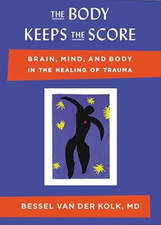 written by Michael S. Scheeringa Read time: 3.9 minutes Bessel van der Kolk’s The Body Keeps the Score was the strike of lightning every science popularizer wishes for. Since publication in 2013, it has parked on the non-fiction best-seller lists, often at #1. At the time I am writing this, it is ranked number ten among all books sold on Amazon. Due to its popularity, it became the bible of a new social movement for trauma-informed care. The Premise In the first half of the book, van der Kolk explained that psychological stress and trauma lodges in the body and damages the operation of many brain functions. The dysfunctions include thoughts, memory, relationships, personality, and the most basic capacities to live, work, and enjoy life. These dysfunctions are vast, ergo, the only logical conclusion is that trauma is the supreme public health crisis. In the second half of the book, van der Kolk then promotes “body treatments” that follow from that conclusion, including sensorimotor psychotherapy, somatic experiencing therapy, psychomotor therapy, EMDR, neurofeedback, theater, yoga, singing, and dance. According to van der Kolk, these treatments are superior to standard treatments, namely cognitive behavioral therapy and medication, because they treat the soul, the whole self, by connecting at the visceral level. Consequently, the book became for the nascent trauma-informed approaches movement what Al Gore’s An Inconvenient Truth was to climate change activists. Whenever progressive bills and projects have been proposed for saving children from violence, preventing crime, or transforming the culture of public schools, this book is almost always cited as the fountainhead of evidence that trauma is the root cause of every group’s problems.
Analysis Does trauma really damage the brain? Van der Kolk is provably wrong on every neuroscience claim he makes about trauma damaging the brain. I published a booklet in 2023 that debunked every one of the 42 different claims he made (Analysis of The Body Keeps the Score). Are the “body treatments” really that great? There is no solid evidence that these treatments are better than conventional treatments, mainly because few controlled studies have been conducted with them. The evidence is so sparse that it’s arguable whether they are even treating PTSD; they could simply be helping with distress from related or separate problems, which get conflated with trauma symptoms. The treatments undoubtedly help some types of people with some issues, but they are not the potent answers to healing trauma, the self, or the soul as van der Kolk suggests. The stunning lack of evidence begs the question of what was the real purpose of this book? If so much effort was put into making dozens of wrong science claims, and alternative treatments were promoted so strongly on nearly non-existent evidence, why was the book written? In my booklet, I concluded that the point was to create a fabricated reality. The aim was to construct a view of human nature that brains are fragile; experience, not genetics, molds nearly all human behavior; and only those who believe this message are the best type of people who have the right morals to truly care about disadvantaged people. The moral high-handedness in this narrative leaks out everywhere in the book. Van der Kolk calls out nearly every constituency for treating patients wrong because they are ignorant or greedy: psychiatrists, “mainstream medicine,” therapists, medical journals, and drug companies. He even blames patients for wanting medications as a shortcut instead of dealing with their problems the right way. The disdain seems like a feature, not a bug, of his writing style. Shaming is the point when we realize that this is really about creating an ideology. It seems inconceivable that his aim was to get the facts right; the point was to have the right beliefs. Why Did This Happen? Thus, the most illuminating issue may be to ask why the book resonated so strongly with so many people. It clearly seems to have filled a gap that many people were waiting to have filled. Viewing the popularity of the book as an index of public appetite, the book is a thick, satisfying sandwich that pretends to address the entire self and soul and experience of being human. It is a revolt against the reductionist, evidence-based thin sandwiches of science that can address only what is actually true and known. It feels better to attach oneself to a belief that promises more, even if it’s not true. The message in this book is that nurture, particularly the negative experiences of nurture, not nature, determines almost completely how we turn out. This narrative is part of a radical leftist ideology that runs from Locke’s blank slate, through Rousseau’s noble savage and Marx’s proletariat, that there is no such thing as human behavior due largely to genetics; all personality traits are developed mostly by life experiences. We all start with the same potential for success, and it is only the forces of oppression that mold some people to be disadvantaged, ipso facto, we need to revolt against the establishment, which, in van der Kolk’s expert manipulation of language and ideas, is the handmaiden of trauma. Like Trauma Dispatch? You can subscribe to our email notices of new posts on this page. Intergenerational trauma: Is it generational? Is it trauma? Are there really five signs of proof?2/2/2024
CATEGORY: CONTROL OF LANGUAGE AND IDEAS
Source: Kenny, Business Insider Read time: 3.2 minutes This Happened A reporter wrote an article on five signs that you may have intergenerational trauma by interviewing one psychotherapist. Who Did This? Serafina Kenny is a health reporter at Business Insider. Her work includes multiple articles based on the views of single experts on diet, longevity, relationship problems, sexology, and dermatology. Among her accomplishments on her bio page on Business Insider includes “She has a Masters degree in Gender, Sexuality and Culture; . . . and has hosted a feminist pop culture podcast.” For this article, Kenny interviewed Hendrix Hammond as an expert on intergenerational trauma. Hammond, based in London, has a master’s degree in family & couple psychotherapy. He has provided workshops on a variety of topics including: The importance of identity and intersectionality; Race and racism in the workplace; and Applying systemic ideas in educational settings. He devoted a page on his personal website to promote Black Lives Matter. The Claim Experiencing trauma and stress can negatively impact individuals who can then pass down to their children a host of maladaptive thoughts, feelings, and behaviors through repetition. The negative impacts on children include relationship dynamics, unconscious thinking patterns, and personality traits. Each impact can be passed down through multiple generations. Analysis Hammond asserted that the following signs indicate that you likely are the victim of intergenerational trauma: (1) You’re very suspicious of people. Your mother or father experienced a trauma that involved betrayal and taught them to be suspicious, and you, as an infant, mirrored this until it became part of your personality. (2) You need to be around people all the time. Your mother or father experienced a trauma and reacted by always “looking around to check if they have enough around them to help them survive,” and then you, as a child, mirrored this and integrated it into your thinking and behavior. (3) You struggle to regulate your emotions. Your parent(s) responded to traumatic events with abnormal numbness or excessive emotionality, and this “gets modeled to their children." (4) You may not have the tools to deal with low moods and mental health issues. If your family never modeled the practice of reaching out to speak to other people to manage their low moods, you never learned how to do that yourself, and, according to Hendrix, “it can quickly turn into extended periods of depression.” (5) You self-harm or have destructive coping mechanisms. Cutting, burning, undereating, or taking risks with your life are other indicators that you modeled after your parents to be “really repressed” in your emotional responses to life. The attractiveness of the theory is obvious because children feel unconscious connections to parents, and we can easily observe so many other examples where children learn culture, language, and skills from parents. But the concept has received criticism from scientists for multiple concerns. One concern is that the theory of intergenerational trauma is not needed to explain why children are similar to parents. Children inherit many similarities through genetics. Another concern is that the “generational” aspect of the theory is difficult to defend. If individuals can be permanently negatively impacted by repetitive exposure from parents, why don’t individuals unconsciously integrate maladaptive thoughts and behaviors of others they frequently observe such as best friends and favorite teachers? And why do some children turn out very different from their parents? Another concern is that many of the life experiences that allegedly impact parents are not traumas. Trauma has a specific meaning in psychiatry of being life-threatening because those are the types of experiences that typically cause posttraumatic stress disorder. By promoting the idea that everyday stress is the more potent “trauma,” when it’s not, the health advice is unlikely to truly help anybody. Another concern is that the theory is based on influences passing from unconscious mind to unconscious mind by repetition, but the mechanism of how that happens, whether it be psychodynamic or physiological in nature, is unproven. Proof of a mechanism is not needed for a theory to be true, but it would help with plausibility. A physiobiological mechanism that is frequently proposed is epigenetics, which is most frequently described as the methylation of DNA causing changes in gene expression. Whether methylation patterns can be transmitted from parent to child remains unproven and is highly controversial in humans. Kenny mentioned the epigenetics theory as a possible mechanism, but to her credit, qualified it as needing more research to confirm it. Why Did This Happen? Despite the lack of evidence for intergenerational trauma, the concept first gained traction in psychology to explain problems in children of Holocaust survivors. The concept has been used often to explain problems in descendants of slavery, refugees, and other forms of oppression. The phrase intergenerational trauma is one of many attempts to control language that have been promoted in the trauma research and clinical fields over the past thirty years. Other phrases for concepts that lack sufficient evidence include toxic stress, adverse childhood experiences, complex PTSD, and racial trauma. All of these have in common the aim to control the idea of human nature as having brains that are fragile and nearly all problems in disadvantaged groups are due to life experiences, as opposed to genetics; and the solution to most of these problems requires revolutionary change in how society treats disadvantaged individuals through expansion of governmental entitlements. Like Trauma Dispatch? You can subscribe to our email notices of new posts on this page. CATEGORY: GOVERNMENT PROJECTS: STATE  From left: Sen. Kimberly Lightford, Gov J.B. Pritzker, and Rep. Carol Ammons Source: Mike Miletich, WAND Read time: 1.9 minutes This Happened The Illinois state legislature passed a law mandating the creation of a Child Adversity Index survey, training for teachers and school board members on trauma-informed practices, and a committee that will determine how data collection is rolled out. The new law took effect January 1, 2024. Who Did This? The Illinois state legislature, led by the House sponsor, Carol Ammons (D), and Senate sponsor, Kimberly Lightford (D). Governor J.B. Pritzker (D) signed it into law. The Premise The new mandates are based on the theory that exposure to adverse childhood experiences (ACEs) causes a host of medical illnesses and mental problems, including permanent changes to the brain, commission of crimes, poverty, poor learning, and a huge range of other disadvantages. Activists believe that collecting data on ACEs and implementing trauma-informed practices will somehow either prevent ACEs or remediate the impact of ACEs. Analysis The new Illinois law, Public Act 103-0413, essentially did six things. (1) The Department of Education must create a Children’s Adversity Index for children 3 through 18 years of age by May 31, 2025. (2) Days allowed for teacher training, called teacher institutes, must include instruction on trauma-informed practices and include this law’s definitions of trauma and trauma-responsive learning environments starting with the 2024-2025 school year. (3) All school board members, beginning with the 2023-2024 school year, must receive four hours training on trauma-informed practices, which may include the concept of implicit bias. (4) In-service trainings that are required for teachers must now include trauma-informed practices, and may include the concept of implicit bias. (5) Licensure for teachers will require demonstrated proficiency in ACEs, trauma, secondary traumatic stress, and creating trauma-responsive learning environments or communities by October 1, 2024. (6) The Whole Child Task Force was charged with an array of tasks to codify how the child adversity index data will be collected and reported, and other related reforms needed to shift resources and procedures. The research evidence does not support the premise of the ACE theory. Since Dr. Vincent Felitti’s initial 1998 ACE study, one hundred percent of the ACE studies that have been cited by activists are cross-sectional studies, which have zero power to make causal conclusions. It is almost certain that these efforts at data collection and training educators will not improve children’s well-being. Why Is This Happening? Activists have been relentlessly pushing the ACEs agenda for years, and are finally succeeding at passing state-wide laws. California was the first. The activism is based on the moral foundation of progressive liberals that care for the disadvantaged trumps other moral concerns (such as tradition, loyalty, patriotism, and liberty) and that human nature is almost completely molded by life experiences instead of genetics. What’s Next? The task force shall reconvene by March 2027 to review progress. It is probably a foregone conclusion that these data collections and trainings are a prelude to the inevitable recommendation for expansion of new government social welfare entitlement programs to address ACEs. Like Trauma Dispatch? You can subscribe to our email notices on this page. |