Unburdened by false humility, postmodern trauma activists claim to have understood for the first time what drives all of human suffering
Trauma DispatchTrauma news you can't get anywhere else. |
|
|
CATEGORY: CONTROL OF LANGUAGE AND IDEAS  Julian Ford, PhD, University of Connecticut Source: Journal of Trauma & Dissociation Read time: 2.1 minutes This Happened On June 21, 2024, Julian Ford, editor of the Journal of Trauma & Dissociation, announced a call for submissions for a special issue on understanding and treating dissociation in the context of intersectional inequalities. Who Did This? Julian Ford has been a researcher on psychological trauma for over four decades. He has published over 250 articles, served on editorial boards of multiple journals, and was the president of the International Society for Traumatic Stress Studies in 2018-2019. Like the strategy of Bessel van der Kolk and Judith Herman who attack the competency of those who disagree with them, he has embraced the notion that clinicians who do not follow his beliefs do harm to trauma victims by overlooking their true problems, misdiagnosing them, and giving them the wrong treatment. Ford was an early adopter of the controversial complex PTSD diagnosis, starting with a 1998 paper with his notion that traditional psychotherapy overwhelms and retraumatizes patients who have complex PTSD, causing them to dissociate. This notion has been debunked with evidence [1]. He may be best known for publishing a series of studies trying to promote a theory that interpersonal and multiple traumas, what he calls polyvictimization, has special, harmful effects that other traumas do not have. Using weak, cross-sectional studies with samples of convenience, he has not proven such extraordinary causal relations. Ford attributes the high severity of patients’ symptoms wholly to their experiences of polyvictimization and makes no mention of the possibility that other factors, such as genetics or nontrauma factors, could have caused their problems [2]. The Claim Intersectionality was coined in 1989 by Kimberlé Crenshaw, an attorney and law school professor who was one of the founders of the systemic racism-based critical race theory. Intersectional theory posits that multiple, overlapping forms of discrimination combine to cause damaging social and political identities. Racial groups are defined not simply by additive inequalities of gender, class, sexuality, and immigration status, but by effects that are greater than the sum of those parts. While widely supported on the Left, the claim has been criticized, mainly by conservatives, as ambiguous, ignorant of broader social problems, focuses too much on group identities instead of individual differences, and a form of identity politics. The premise of Adverse Childhood Experiences—that the number of childhood experiences has a compounding effect—is the same premise as intersectionality, except in ACEs the predictors are any stress or trauma and the outcomes are mental and physical health. In the field of mental health, supporters of intersectionality claim that unless providers take intersectionality into account, they will somehow be providing inadequate, harmful, or wrong types of interventions for victims. Analysis “Intersectionality” is a successful ideological branding borne of the strategy that you can’t see a problem if you can’t name a problem [3], regardless of whether it is true. In the trauma world, the branding names of ACEs, toxic stress, and complex PTSD have been successful, too. The parallels between Ford’s theory of polyvictimization and intersectional theory are striking. It seems no coincidence that they arose concurrently during the phase of increasingly popular progressive leftist theories in academia, and not coincidentally the same time that the controversial and debunked theories of complex PTSD and toxic stress arose. It’s not clear whether they influenced each other in their early stages, but Ford’s editorial signals that these trauma theories have melded seamlessly with the racial- and class-based intersectional movement. It is noteworthy that intersectional theory is a causal theory, i.e., that oppressive life experiences borne of societal inequalities cause extraordinary human suffering and failure to flourish. ACEs, toxic stress, and complex PTSD likewise are causal theories of a similar kin. Swap discriminations, stresses, and traumas with capitalism, and they are nearly the same as Marxism, the original, enduring intellectual manifesto that attributes degradation of the human self wholly to life experiences, and which shares a skewed view of human nature that genetic differences play no role in variations of behavior and humans are highly malleable. REFERENCES [1] De Jongh A, Resick PA, Zoellner LA, et al. Critical analysis of the current treatment guidelines for Complex PTSD in adults. Depression and Anxiety. 2016;33(5):359-369. doi:10.1002/da.22469 [2] Julian D. Ford, Tobias Wasser & Daniel Connor. "Identifying and determining the symptom severity associated with polyvictimization among psychiatrically impaired children in the outpatient setting," Child Maltreatment 16 (2011): 216-226. [3] Kimberlé Crenshaw (December 7, 2016). The urgency of intersectionality. TED Talk, https://www.youtube.com/watch?v=akOe5-UsQ2o Like Trauma Dispatch? You can subscribe to our email notices of new posts on this page. CATEGORY: CONTROL OF LANGUAGE AND IDEAS  Megan McElheran, Psy.D., psychologist, founder of Before Operational Stress Source: Newswires EIN press release Read time: 2.0 minutes This Happened A press release on June 24, 2024 announced that the leadership of a Los Angeles-based emergency medical ambulance service had been trained in the Trauma Informed Leadership Program, hailing it as a milestone as the first EMS company in southern California to complete such a program. Who Did This? Before Operational Stress (BOS) provided the Trauma Informed Leadership Program training. Founded by psychologist Megan McElheran, they are a private company based in Calgary, Canada. Believing the world is in the midst of a mental health epidemic, BOS tailors their training products to public safety personnel and first responders. BOS provides pre-recorded videos, live presentations, and support programs for employees. The Trauma Informed Leadership Program costs $500 per person. The Premise The premise of the BOS business model is that the stress encountered by first responders and law enforcement causes mental disorders. Their website asserts that 23% of public safety personnel suffer from PTSD and 50% screen positive for at least one mental disorder. The leadership program content is divided into four modules:
Analysis The Canadian government has adopted the phrase “operational stress injury” as a non-medical term for psychological problems caused by trauma exposure for military or first responders. The national Operational Stress Injury Social Support program was created in 2001. The word 'injury' was selected because it was believed a shift in language away from mental disorders— posttraumatic stress disorder, major depression, and anxiety—would persuade individuals to seek help more readily. The company’s assertion on their home page that 50% of public safety personnel have mental health conditions from workplace stress is wildly higher than the normal population. This misinformation comes from a single survey with major flaws [1]. Survey respondents were a self-selected sample of less than four percent of Canada’s public safety personnel. The participants knew they were selected for being public safety personnel and they may have been motivated to register their perceptions of workplace stress. This finding contrasts with most other literature that has found first responders to be an especially resilient population. For example, a literature review of police officers exposed to trauma events found rates of probable PTSD closer to 7% [2]. An analysis of their year-long program for public safety personnel was unconvincing. Only 19 participants completed measures six months after the program out of a possible 203. Small, statistically significant improvements were found in PTSD, quality of life, stigma, and perceived social support. They failed to find improvements in depression, anxiety, stress, alcohol use, emotional regulation, and resilience [3]. Why Is This Happening? While the Before Operational Stress group has adopted some of the trauma-informed movements' branding language, they seem to have embraced a lite-version of the ideology: Their website is not filled with the trauma-informed misinformation that toxic stress and ACEs damages brains. It is a concern, however, that they promote the theory that humans are highly malleable to life stress. Evidence continues to mount that programs built on that notion are not very helpful for people who need help the most. REFERENCES [1] Carleton RN, Afifi TO, Turner S, Taillieu T, Duranceau S, LeBouthillier DM, et al. (2018). Mental disorder symptoms among public safety personnel in Canada. Canadian Journal of Psychiatry 63:54–64. doi: 10.1177/0706743717723825 [2] Regehr C, Carey MG, Wagner S, Alden LE, Buys N, Corneil W, et al. (2021). A systematic review of mental health symptoms in police officers following extreme traumatic exposures. Police Practice and Research 22(1):225-239 doi: 10.1080/15614263.2019.1689129 [3] Stelnicki AM, Jamshidi L, Fletcher AJ, Carleton RN (2021). Evaluation of Before Operational Stress: A program to support mental health and proactive psychological protection in public safety personnel. Frontiers in Psychology 12:511755. doi: 10.3389/fpsyg.2021.511755 Like Trauma Dispatch? You can subscribe to our email notices of new posts on this page. CATEGORY: CONTROL OF LANGUAGE AND IDEAS  Frank Anderson, MD, psychiatrist Source: ABC News Read time: 1.9 minutes plus brief video This Happened Two days after the attempted assassination of Donald Trump, a psychiatrist interviewed by ABC News warned viewers that you can develop PTSD by watching the video footage. Who Did This? Frank Anderson's personal website describes himself as an author, psychiatrist, therapist, speaker and “trauma specialist who’s spent the past three decades studying neuroscience and trauma treatment.” His website sells video trainings on Internal Family Systems theory—one 60-minute video for $50, three 60-minute videos for $149, and a more expensive six-video course. On the Internal Family Systems website, he is part of a team of presenters who sell twelve pre-recorded videos: This “$1,239.95 value [is] just $299.00 today.” He published a 2017 manual on Internal Family Systems therapy, a 2021 book on how to heal complex PTSD, and a 2024 autobiographical memoir of his childhood and adult struggles with shame and abuse. His memoir explained that he suffered childhood trauma when his parents took him to a psychiatrist for play therapy because they were concerned about his sexual orientation. His memoir was endorsed by Bessell van der Kolk and Gabor Maté. He appears frequently as a trauma expert on news shows and podcasts. The Claim In the adjacent 2-minute video clip, Dr. Anderson explained that individuals can get PTSD from watching the Trump assassination attempt or other violent videos. He further explained in a confusing change of topic his belief that there is a “sweet spot” of talking about violent video (not watching the video itself)—talking about the video several times is fine, but the harm occurs when talking about it six or ten times. Analysis
Those claims are wrong and debunked by evidence. There are no known case reports published of an individual developing PTSD from watching video violence toward a person they do not know personally. I have conducted or supervised the evaluations of over 500 trauma-exposed individuals in clinic work and five research studies on trauma, and have never encountered such a case. If Dr. Anderson knows of such a case, he ought to write it up: it would be the first one. The only known study of individuals exposed naturalistically to the same television footage of trauma and then assessed by interview involved children who witnessed the 1986 space shuttle Challenger explosion live in their classrooms [1]. None of the children had developed PTSD one year later. Nearly all other studies of viewing violent video were based on retrospective self-report questionnaires, methodologically flawed, and no subjects could be diagnosed with PTSD [2]. Anderson’s description of finding a sweet spot of talking about the events to prevent PTSD is misinformation. PTSD symptoms develop immediately following the moment of fear during trauma exposure in one hundred percent of cases. There is no evidence that talking about trauma events causes PTSD. His information about critical incident stress debriefing was mostly accurate but it’s relevant for decreasing severity of existing symptoms not causing or preventing them, and has nothing to do with watching violent videos. The individuals he described who watch or talk repeatedly about videos on purpose are the opposite of PTSD. In fact, individuals with PTSD typically avoid reminders about their experiences. REFERENCES [1] Terr LC, Bloch DA, Michel BA, Shi H, Reinhardt JA, Metayer S. Children's symptoms in the wake of Challenger: a field study of distant-traumatic effects and an outline of related conditions. American Journal of Psychiatry. 1999 Oct;156(10):1536-44. doi: 10.1176/ajp.156.10.1536. [2] Just one example of many such studies: Holman EA, Garfin DR, Lubens P, Silver RC (2020). Media Exposure to Collective Trauma, Mental Health, and Functioning: Does It Matter What You See? Clinical Psychological Science 2020, Vol. 8(1) 111–124, doi: 10.1177/2167702619858300 Like Trauma Dispatch? You can subscribe to our email notices of new posts on this page. Article reviews old debate on how to define trauma events. But what is the debate really about?6/30/2024
CATEGORY: CONTROL OF LANGUAGE AND IDEAS  Brian P. Marx, Ph.D., National Center for PTSD, and Department of Psychiatry, Boston University Source: Marx et al., 2024 [1] Read time: 2.5 minutes This Happened In February 2024, the leading trauma research journal published a review article attempting to bring some clarity to the controversy about how a traumatic event ought to be defined. Who Did This? Brian P. Marx, Ph.D. is a psychologist who specializes in posttraumatic stress disorder (PTSD). His work has focused on the assessment of and effective treatment for PTSD. The Premise When making the diagnosis of PTSD, the first gatekeeper criterion is whether an individual experienced a truly traumatic event or not. In the diagnostic criteria, the event is called Criterion A. If the definition of Criterion A is too narrow, individuals with PTSD won’t get the diagnosis. If the definition is too broad, individuals will be falsely diagnosed, potentially receive the wrong treatment, and contaminate the validity of research studies. The controversy about how to define traumatic events is as old as PTSD itself, stemming to its birth in 1980. Marx argued that a new review was needed because of current events—race-related events and the COVID-19 pandemic presented new quandaries with energetic challengers. Marx organized the evidence by noting that there are four sides in the debate: (1) Keep criterion A the way it is, which is restricted to life-threatening events that are either directly experienced, witnessed happening to others, or learning about events secondhand that happened to loved ones. (2) Broaden criterion A to include non-life-threatening events, such as divorce, expected death of a loved one, financial stress, giving birth, and racial discrimination. (3) Narrow criterion A to only events that are directly experienced and witnessed, and exclude events that are learned about secondhand. (4) Eliminate criterion A because any attempt to comprehensively define all events will always leave some ambiguity. Marx and colleagues recommended option #1—keeping criterion A the way it is—because the evidence for the other options is too weak or logically indefensible. Analysis The review covered the relevant issues thoroughly and without bias, and came to a sensible (mostly) conclusion supported by evidence. As review articles go in psychiatry, it's one of the better ones. The authors respected all opinions by creating four sides to the argument, but, in reality, there are only two main sides—those who want to keep it the way it is (#1) and those who want to broaden it (#2). Option #3 for narrowing criterion A probably should have been the recommendation, but it’s close to splitting hairs. The gatekeeping is implemented according to #3 in all good studies based on common sense, so it does not generate many vocal supporters. Option #4 for eliminating criterion A comes from a small but vocal, radical group who advocate for a range of other extraordinary ideas. What’s missing was an analysis of why this debate was stoked in the first place. Why Is This Happening? Nearly all the heat, and a swarm of weak studies, for changing criterion A comes from the efforts of those who want to broaden it to include non-life-threatening events. This effort is largely ideologically-driven, not science-driven. The strategic benefit for non-life-threat events to gain standing within PTSD is that it gives the appearance of authenticity to the premise that human nature is highly malleable to everyday stressful events of modern society (as opposed to the less common, truly terrifying, life-threatening events). This is fundamentally a difference in how one views human nature. This view of high malleability is key to progressive leftist advocacy movements that fighting for the care of disadvantaged and minority groups must trump other personal rights and societal obligations. The same skewed moral sentiment that drives the redistribution of wealth in the welfare state and socialism to rectify harms done to the disadvantaged is the same sentiment that attempts to elevate everyday stressors—including poverty, neglect, parental incarceration, pollution, racial discrimination, transgender discrimination, and historical treatment of minority groups—to be considered harmful, traumatic events, and sometimes even public health crises, as in the cases of COVID-19 and climate change. No good research evidence exists, however, that those types of stressors cause the harm of PTSD. If academia can control the language and ideas of science by redefining stress as life-threatening trauma, it controls an important narrative for leveraging policy, laws, and public health mandates. The attempt to redefine trauma has almost never been about science; it’s about conflating social justice with research. REFERENCES [1] Marx, Brian P; Hall-Clark, Brittany; Friedman, Matthew J; Holtzheimer, Paul; Schnurr, Paula P (2024). The PTSD Criterion A debate: A brief history, current status, and recommendations for moving forward. Journal of Traumatic Stress 37(1):5-15, doi 10.1002/jts.23007 Like Trauma Dispatch? You can subscribe to our email notices of new posts on this page. CATEGORY: CONTROL OF LANGUAGE AND IDEAS  Jack Shonkoff, M.D., founder National Scientific Council on the Developing Child Source: Center on the Developing Child 6/5/24 email newsletter Read time: 2.3 minutes This Happened On June 5, 2024, a group that promotes the theory of toxic stress released a report on “human variation” that adds racism to the list of stressors. Who Did This? The eleven-member National Scientific Council on the Developing Child is a private group of academic scholars on child development. The group was formed in 2003 to advocate for the narrative of toxic stress as the keystone for reforming public health policy in the United States. Since 2006, the council has been housed within the Center on the Developing Child at Harvard University. Both the Council and the Center were founded and are run by pediatrician Jack Shonkoff. The council was formed with researchers so that their science credentials would give the council the appearance of authority. As noted in the report, their mission is to have “an evidence-based approach to science synthesis that is informed by the peer-reviewed literature and recognizes the shared opportunities for government, businesses, communities, and families to promote the well-being of all young children.” The Claim The new report released by the Council is titled “A World of Differences: The Science of Human Variation Can Drive Early Childhood Policies and Programs to Bigger Impacts. Working Paper 17.” The Council releases approximately one long working paper per year as part of the many promotional materials and infographics that the Center disseminates. These longer working papers are designed to set the intellectual framework that buttresses the Center’s advocacy efforts. The main message of this working paper ostensibly was that there are individual differences in traits, or “human variations,” that make individuals vulnerable to harm and that also may limit some individuals from receiving the full benefit from childhood public health programs. The paper did not provide details about these variations, but did mention broad group categories of parent education, family income, race, ethnicity, and community environment, and broad individual categories of temperament, aggression, and executive functions. These variations that limit the effectiveness of programs should be viewed as new, crucial opportunities to reallocate funding to target certain groups. Analysis While the working paper was framed as being about a scientific issue of human variation, the emphasis was on racism. Race, racism, or systemic racism was mentioned 21 times in the 17-page report. No other type of variation received as much emphasis. The paper seems to be an attempt to add racism into the framework of the toxic stress and adverse childhood experiences (ACE) movements. The conventional ACE research claims that ten ACE events can cause extraordinary damage to brains, cause physical diseases, and thereby hinder human flourishing. This paper seems to imply that racism be added to the well-known list of ten ACE stressors. While scientist activists have been increasingly trying to link racism to neurobiological damage in recent years concurrently with efforts to promote other progressive liberal projects (i.e., critical race theory, DEI, and transgenderism), there exist no credible set of strong, reliable, or replicable evidence that racism causes permanent brain damage or physical disease. There are other more viable explanations for why certain poor health outcomes are associated with different races. Simultaneously, the report’s recommendation that targeting certain groups based on racism can increase the impacts of childhood programs was asserted without evidence. There is no body of evidence that has shown this. Why Is This Happening? Malicious racism should, of course, be addressed in society, but this working paper takes a further step with a unique argument that racism is a toxic stress that damages brains and health. As has been noted in other Trauma Dispatch posts, both the toxic stress and ACE narratives are controversial, unproven theories that are based on weak, cross-sectional studies. It was not clear in the paper why racism was suddenly emphasized after twenty years of advocating for toxic stress. As with nearly all social justice causes, as the movements drag on and the arguments become stale, advocates realize that they need to refresh the message to revitalize public interest and remain relevant. This has been called the March of Dimes syndrome after the organization that was founded in the 1930s to address polio, but was compelled to change their mission to birth defects after polio was vanquished. After twenty years of activism and sixteen previous working papers, perhaps the Council realized racism would enhance their message. Like Trauma Dispatch? You can subscribe to our email notices of new posts on this page. CATEGORY: CONTROL OF LANGUAGE AND IDEAS  Barbara Unell Source: KSHB 41 Kansas City news Read time: 1.5 minutes plus brief video This Happened An art installation was erected inside a popular Kansas City destination for families to raise awareness of toxic stress and how to prevent it. Who Did This? Barbara Unell, president of the Raised With Love and Limits foundation, obtained degrees in journalism and psychology, and built a long career of promoting compassion in the world. She has co-authored 17 books, including half a dozen with a child psychologist on how to discipline children. She has also been a newspaper columnist, radio host, and founder of magazines. The Claim This public health campaign is based on the toxic stress narrative that trauma permanently damages brains and causes a wide range of physical and mental problems. And the main way to prevent these problems is for children to have at least one nurturing parent relationship. The art installation was erected inside Kansas City Union Station, which is a mixed-use railway station that houses museums, traveling exhibits, a live theater, a movie theater, and a planetarium. The 45-second video below was filmed while the installation was being erected, and includes a message from Unell. Note: The arcade activities shown in the video are not part of the art installation. Analysis Unell clearly has compassion for helping others. Passion, however, does not help anybody if the intellectual framework behind it is flawed. The science behind toxic stress has been debunked. And despite many attempts over many years, simplistic public health campaigns have not been able to prevent traumatic events of abuse and violence. Contrary to the many other toxic stress campaigns in the United States, instead of alarming citizens of the dangers of trauma, this one emphasizes that prevention is possible by the presence of a single nurturing adult. This aspect of the toxic stress narrative has been increasingly emphasized by activists in recent years because they realized that their message that trauma damages brains was depressing and unhopeful. The logic of this campaign is fuzzy. It’s not clear if Unell believes a parent can prevent adverse events from happening, or prevent the harmful consequences after events happen, or both. It’s also unclear how this activity center will create supportive parents. It seems unlikely that a brief encounter with educational material in an art installation will create lasting parenting changes. Further, it seems that the parents who are able and willing to bring their children to the center are already loving and responsible parents. The parents who are not able or willing to bring their children are the ones most likely to need intervention. The advice that children need nurturing parents is, of course, common sense. But there is no research study that shows trauma or stressful events can be substantially prevented. And there is no research study that shows harmful effects that might follow trauma events can be prevented by early psychological intervention [1], medication [2], or a relationship. REFERENCES [1] Rose SC, Bisson J, Churchill R, Wessely S. Psychological debriefing for preventing post traumatic stress disorder (PTSD). Cochrane Database of Systematic Reviews 2002, Issue 2. Art. No.: CD000560. DOI: 10.1002/14651858.CD000560. Accessed 16 June 2024 [2] Bertolini F; Robertson L; Bisson JI; Meader N; Churchill R; Ostuzzi G; Stein DJ; Williams T; Barbui C (2024). Early pharmacological interventions for prevention of post-traumatic stress disorder (PTSD) in individuals experiencing acute traumatic stress symptoms. [Review] Cochrane Database of Systematic Reviews. 5:CD013613, 2024 May 20. Like Trauma Dispatch? You can subscribe to our email notices of new posts on this page. CATEGORY: CONTROL OF LANGUAGE AND IDEAS  Janna Gordon, Director, Brooke Hancock Family Resource Network Source: WTRF news Read time: 1.5 minutes plus short video This Happened On April 29, 2024, a local nonprofit charity provided a free information workshop for the community on the adverse childhood experiences (ACE) theory and how to be resilient to stress. Who Did This? The Brooke Hancock Family Resource Network is a nonprofit charity which has been led by Director Janna Gordon since 2022. Brooke and Hancock are the two smallest counties in West Virginia, nestled in the northern panhandle sliver of West Virginia between Ohio and Pennsylvania. The Premise The workshop informed participants about the alleged harmful impact of ACEs and techniques to build resilience to stress. In the 30-second video of the workshop below, it briefly shows a participant thumbing through a deck of 52 cards which included the 10 ACEs depicted as aces found in playing cards. The deck also includes 42 “resilience strategies” depicted in the suit of hearts. Some of them seem like reactions that can counter stress, such as developing self-esteem, and hope. Many of them, however, have no clear relation to dealing with stress and seem like everyday advice on how to socially cooperate, such as having clear expectations and rules, learning responsibility, experiencing success, modeling appropriate behavior, helping a friend, trust, a sense of belonging, and showing empathy. Analysis Workshops like these are concerning because they teach participants that they are fragile, when evidence, and empirical experience, indicates they are not. As writer Abigail Shrier emphasized in her new book Bad Therapy, industries of professions that deal with children, such as counselors and educators, treat children as if they are fragile and should be afraid of everyday stressors, which may be more likely to instill harmful anxieties rather than foster resilience and self-reliance [1]. This tends to be the philosophy of progressive leftist policies. The deck of cards seems like a clever way to engage with participants, especially youths who are less disposed to self-reflect in one-on-one conversations with adult counselors. They are, however, mostly common sense that may seem patronizing to youths who already have adequate social skills. A concern is that it teaches individuals that any of their unhappiness is due to life experiences that molded their characters, instead of the more likely explanation that they were born with heritable character flaws. It teaches them to blame their problems on society or on someone else. It’s a potentially counterproductive strategy for teaching people to not look inward to truly deal with inborn limitations. Why Is This Happening? Trainings like these are held frequently across the United States by nonprofits and university centers to try to focus community efforts on ACEs to improve societal problems. These are the grassroots backbone of the ACE movement that promotes an unproven theory that physical diseases and inequities in society are caused by stressful life experiences. REFERENCES [1] Abigail Shrier (2024), Bad Therapy: Why the Kids Aren’t Growing Up. Sentinel: New York Like Trauma Dispatch? You can subscribe to our email notices of new posts on this page. CATEGORY: CONTROL OF LANGUAGE AND IDEAS 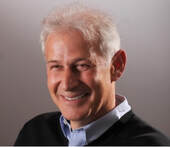 Jack Shonkoff, M.D., founder, Center on the Developing Child at Harvard University Source: Center on the Developing Child newsletter, April 3, 2024 Read time: 3 minutes This Happened On April 3, 2024, the Center on the Developing Child at Harvard University announced that Jack P. Shonkoff, M.D., has decided to step down at the end of June after 18 years as Center Director. Who is Jack Shonkoff? Shonkoff’s most well-known contribution is coining and then disseminating the concept of “toxic stress,” which has been cited over 20,000 times in science articles, many more times in the media, and helped to transform the ideological debate on how to raise children. He is a pediatrician who focused most of his academic career on advocacy and social policy. He has been first or secondary author on over 50 journal publications, most of them commentaries or policy recommendations, and over 30 book chapters. He has had prominent roles in national organizations and testified to Congress about the well-being of children. The Premise Shonkoff’s advocacy has had an extraordinary influence on the field of pediatrics and shaping public perception by setting an intellectual narrative that children are far more fragile than previously thought and society must protect them from stress and adverse experiences. In 1998-2000, he chaired a committee of experts on child development who published a policy monograph for the National Academy of Sciences which concluded that child development is derailed on a massive level by environmental stressors, and for the first time created the concept of “stressors that are toxic” [1]. Next, in 2003, while at Brandeis University, Shonkoff spearheaded the creation of the National Scientific Council on the Developing Child, which, despite the name was not a national government agency; the council was simply a private group of like-minded scholars with a stated mission to transform social policy. Their aim was to change the care of very young children from “a private, family matter” to influence national policy about children based on new neuroscience [2]. Then, in 2006, Shonkoff moved to Harvard University and became the founding director of the Center on the Developing Child. By then, the Council, which followed Shonkoff to Harvard, was worried that “just saying ‘stress’ more loudly wasn’t going to get them where they needed to go” [2]. The Council agreed to invent and disseminate the phrase “toxic stress.” Further, to convey their message more clearly to the public, they also invented a hierarchical taxonomy of positive stress, tolerable stress, and toxic stress. With a few years, their efforts made toxic stress widely accepted. Prior to Shonkoff’s advocacy, there had never appeared a cogent connection between childhood psychological stress and derailed child development; the concept of stressors that are toxic had been used only to describe animals, mostly fish and shrimp, poisoned by pollutants. His synthesis appeared to be a stunning connection of psychological stress to major adult disease and dysfunction. The concept of toxic stress is nearly identical to, and borrows heavily from, the adverse childhood experiences (ACE) movement, which claims, based on weak, cross-sectional studies, that stress and trauma in childhood permanently damages brains and causes a wide range of serious medical illnesses. The concept is also nearly identical to the claims in the 2014 best-selling book by Bessel van der Kolk, The Body Keeps the Score. Analysis The great tragedy of Science—the slaying of a beautiful hypothesis by an ugly fact. —Thomas Henry Huxley Shonkoff was a master at pulling together cherry-picked research through a wordsmith’s skill with academic rhetoric and humanitarian sentiment to convince others that he had finally found the source of nearly all childhood suffering. Toxic stress would have been a useful theory to provide levers for policy makers to pull to raise children out of chronic misery. None of it, however, is true. The supporters of toxic stress and ACE push back on any criticism by asserting that there is a widespread consensus and the scientific debate is over. As Shonkoff wrote in 2000, “The scientific evidence on the significant developmental impacts of early experiences, caregiving relationships, and environmental threats is incontrovertible…The overarching question of whether we can intervene successfully in young children’s lives has been answered in the affirmative and should be put to rest” [1]. Shonkoff omitted, however, or perhaps didn’t realize given his limited experience as a researcher, that the ACE research upon which he heavily leaned, is one-hundred percent cross-sectional in nature, which has zero power to provide causal conclusions. When individuals have been studied prospectively with assessments gathered before trauma and repeated after trauma, most studies fail to support toxic stress, and the few that do have been unreplicable [3]. A mechanism for how ACEs can cause a massive array of both mental and physical dysfunctions from psychological stress, including many that are normal, everyday stressors, has never been found. What’s Next? At age of approximately 78, it’s not clear what’s next for Shonkoff. The announcement stated that he plans “to dedicate all his time to an external, field facing agenda. Jack is not retiring…He will focus his time and energy on engaging directly with policymakers and community-based leaders who are eager to leverage scientific insights…” Whether he has scientific insights is arguable. It is conceivable that his legacy will instead be a doctor who was gripped by a progressive leftist ideology that children are fragile and then found studies that fit while ignoring better science. Toxic stress is not a scientific term. It is a marketing slogan. REFERENCES [1] National Research Council and Institute of Medicine. "From Neurons to Neighborhoods: The Science of Early Childhood Development," National Academy Press, (2000). [2] Center on the Developing Child at Harvard University. "A Decade of Science Informing Policy: The Story of the National Scientific Council on the Developing Child," (2014). [3] Andrea Danese et al. "The origins of cognitive deficits in victimized children: Implications for neuroscientists and clinicians," American Journal of Psychiatry 174 (2017): 349-361. Julia A. DiGangi et al. “Pretrauma risk factors for posttraumatic stress disorder: A systematic review of the literature.” Clinical Psychology Review 33 (2013):728-744. Michael S. Scheeringa. "Reexamination of diathesis stress and neurotoxic stress theories: A qualitative review of pre-trauma neurobiology in relation to posttraumatic stress symptoms," International Journal of Methods in Psychiatric Research (2020). Like Trauma Dispatch? You can subscribe to our email notices of new posts on this page. Health care org creates center for racial trauma: Better care, education, or something else?5/24/2024
CATEGORY: CONTROL OF LANGUAGE AND IDEAS  Javeed Sukhera, M.D., Ph.D., chair of psychiatry at Institute of Living, founding director of the center Source: Hartford HealthCare press release Read time: 2.7 minutes plus short video This Happened Claiming to be the first of its kind, on April 23, 2024, Hartford HealthCare (Connecticut) announced the opening of its Center for Research in Racial Trauma and Community Healing. Who Did This? The center’s founder is child and adolescent psychiatrist Javeed Sukhera, MD, PhD, who is the chair of psychiatry at the Institute of Living at Hartford HealthCare. His publications focus on recognizing bias, stigma, and microaggressions in health care settings. He is a past Diversity Leadership Fellow with the American Psychiatric Association. Serving on the Police Services Board for the London, Ontario police force from 2018-2021, he led the Board’s anti-racism efforts and trauma-informed policy reform. He and collaborators have created “transformative learning theory” as a model for inserting implicit bias training into the education of health professionals [1]. The Hartford HealthCare system also houses a Center for Equity with progressive views that it is wrong to misgender someone and that puberty blockers have saved lives of transgender children by preventing suicide. The Premise Current projects already underway at the Center of Racial Trauma include: 1. A culturally affirming parent support group for Black and African American parents. 2. A study of mistrust and discrimination in reproductive care in partnership with UConn Health. 3. Tapping artificial intelligence to analyze stigmatizing and biased language in electronic health records in collaboration with the Massachusetts Institute of Technology. The Center’s future mission, according to its website, is to provide (1) Research on how racial trauma affects individuals and communities, (2) Education to train mental health professionals, improve equity, and reduce bias, and (3) Community Engagement through youth programs, mentorship, and mental health services. The Center’s staff consists of the chair of psychiatry (Sukhera) and one research associate with a master’s degree in health administration. They did not state what outcomes would be measured to gauge the success of the Institute. They did not announce new projects, training programs, or services. Analysis If the intent is better care, there is no prior empirical evidence that it can create better outcomes of care, as this center is the first of its kind. Since Dr. Sukhera has never received NIH research funding and has never first-authored a controlled research experiment, it is not clear who is going to conduct the research to produce better outcomes. If the intent is education for the community, the terminology may lead to confusion. Despite the attention-grabbing assertion that “racial trauma” exists, this construct is not trauma by the traditional definition used in psychiatry. Traumatic experiences are defined as life-threatening, and they are typically sudden, unexpected discrete events that create a sense of fear and panic. In contrast, racial trauma seems synonymous with racial discrimination, which are chronic experiences that are either known and expected or covert. Racial trauma is one of a host of non-life-threatening stressors that scholar activists have been trying to elevate into traumas for ideological motivations. Others include historical trauma, intergenerational trauma, climate trauma, complex trauma, developmental trauma, and a dozen or more experiences from the adverse childhood experiences studies. Why Is This Happening? The main driving force seems to be the arrival of Dr. Sukhera in 2021, who describes himself a “scholar activist” [2}. He appears to be one of the breed of medical professionals and academic professors who have shed most pretense of equipoise and aggressively advocate for progressive leftist causes under the guise of extraordinary caring. In this short video of him discussing the new center, he describes that the new center will acknowledge the pain of racial trauma and that it is real. Besides acknowledging, however, it’s still a bit vague what the center will do [3]. Dr. Sukhera’s posts on X (formerly Twitter), interviews, and articles provide steady representations of the progressive liberal ideology including DEI, gender-affirming care, gun control, implicit bias, and a belief that medicine is systemically racist. His social media posts emphasize how deeply he feels human suffering. In a post from 3/9/2023, he thinks people who want to ban gender affirming care are deliberately cruel (3/9/23). In another from 11/7/2023: “If you hurt I hurt. If you’re afraid—I am here to have your back…We must be hypervigilant in protection of one another’s safety.” If the intent is something besides legitimate hopes for better care or accurate education, this type of strategy has been seen before. Communities have tried to leverage racial sensitivity before to alleviate racial tensions, prevent crime, and provide the appearance that something significant is being done. Philadelphia initiated a transformation of the city’s mental health services into a trauma-informed system in 2005 to address high unemployment and murder rates. Baltimore responded to riots in 2015 with a trauma-informed series of transformations for mental health services [4]. Violent crime in both cities remain well above the national average, and crime in general has increased. REFERENCES [1] Sukhera, Javeed; Watling, Christopher J.; and Gonzalez, Cristina M., "Implicit Bias in Health Professions: From Recognition to Transformation" (2020). Paediatrics Publications. 2052. https://ir.lib.uwo.ca/paedpub/2052 [2] Conversations on Diversity, Equity, and Inclusion with the Medical Director Institute (March 31, 2023). National Council for Mental Wellbeing. https://www.youtube.com/watch?v=ljmTU7Lt90M [3] News 8 WTNH.com (April 23, 2024). https://www.wtnh.com/news/health/hartford-healthcare-launches-new-research-center-that-focuses-on-racial-trauma/ [4] The genesis of both city efforts described in Michael S. Scheeringa (2021), The Trouble With Trauma: The Search to Discover How Beliefs Become Facts. Like Trauma Dispatch? You can subscribe to our email notices of new posts on this page. CATEGORY: CONTROL OF LANGUAGE AND IDEAS  International Society for Traumatic Stress Studies logo Written by Michael S. Scheeringa Read time: ~2.5 minutes To solve complex social problems, at least two things are needed: (1) Policy makers need information outside their areas of expertise in digestible formats, and (2) that information often must come from scientists. Scientists’ reason to exist in society is, in distilled form, to extract truth from the natural world for the rest of us. For psychological trauma, the main organization of scientists is the International Society for Traumatic Stress Studies (ISTSS). The worldview of those who contribute to ISTSS recommendations, however, does not always represent what the evidence says about trauma. Since its founding in 1985 as the Society for Traumatic Stress Studies (“International” was added in 1990), the Society has done more than any other organization, by far, for the promotion of good science and competent clinical work to assess and treat trauma victims. They have published the main journal for trauma research, the Journal of Traumatic Stress, since 1988, and hold an annual conference every November. I joined in 1994 and presented my work at nearly every annual conference for twenty-three years. I, like almost all trauma researchers, considered it my professional home. I was “sort-of famous” within the group as one member told me when seeing my name tag at a conference. I attended my last ISTSS conference, however, in 2017. I had been dreading the conferences for several years because, in part, the presentations were increasingly uninformative lectures about events that were not traumas or theories that weren’t true. I had tried to keep it interesting for myself by going to the audience microphone in the question-and-answer periods, but if I dared question their dogmas, presenters stared back blankly as if I had just suggested killing their pets. Viewpoint diversity? No thanks. Due to the nature of trauma, ISTSS had always been forced to struggle with slapdash research and dubious ideas. What’s new has been the rise of advocacy. The rise was gradual, and perhaps inevitable, as the concept of posttraumatic stress disorder (PTSD) became increasingly well-known through the 1990s and 2000s. By 2005, advocacy was on steroids. Activist-minded researchers expanded the notion of trauma well beyond life-threatening experiences to include everyday stress experiences (e.g., neglect, emotional abuse, divorce, poverty) in order to draw attention. Complex PTSD was tacitly accepted as a valid disorder even though there is zero validation data and it had been savaged by multiple experts [1-3]. The concept of toxic stress—that psychological trauma permanently damages the brain—was embraced as canon by invited keynote speakers and Society reports even though the only supporting human data comes from weak cross-sectional studies. Pre-trauma prospective studies fail to support it. Climate change was endorsed as a source of trauma in an ISTSS brief even though the level of threat and the man-made theory have been debunked by many credible scientists, and, even if it were true, is more of an everyday stress than a life-threatening trauma. The list goes on to racial trauma, historical trauma, intergenerational transmission of trauma and other unproven theories. In the 2023 conference program, nearly a third of the symposia were ideologically-based on complex PTSD, toxic stress, adverse childhood experiences, equity, race, COVID, or other non-trauma experiences. Why Did This Happen? These theories were invoked for the humanitarian project to conquer suffering at the expense of other virtues that parallels the progressive leftist agenda of the past century. ISTSS got a late start, but its evolution has tracked closely to the progressive ideological capture of academia in general, including the acceleration of more radical woke movements in the past decade. The mission of ISTSS has been impacted by trauma activists to become a diluted archive of uncritical psychology, politics, sociology, and anthropology based on emotional appeals to perfect society, presented as science. The cost of this advocacy is high. One cannot endlessly redefine concepts to suit activist needs irrespective of data without eventually sacrificing truth, honesty, and holding the respect of others. While ISTSS still holds a seat at the table for publishing and presenting good studies, as long as they don’t contradict the canon too directly, policy makers should not mistake it for behaving with a purity of mission to find truth. REFERENCES [1] Shawn P. Cahill et al., "Sequential Treatment for Child Abuse-Related Posttraumatic Stress Disorder: Methodological Comment on Cloitre, Koenen, Cohen, and Han (2002)," Journal of Consulting and Clinical Psychology 72 (2004): 543-548. [2] Dean G. Kilpatrick. "A special section on complex trauma and a few thoughts about the need for more rigorous research on treatment efficacy, effectiveness, and safety," Journal of Traumatic Stress 18 (2005): 379-384, p. 383. [3] Patricia A. Resick et al. "A Critical Evaluation of the Complex PTSD Literature: Implications for DSM-5," Journal of Traumatic Stress 25 (2012): 241-251 Like Trauma Dispatch? You can subscribe to our email notices of new posts on this page. |